Want to learn tips for better talking about race and racism with kids in a Christian household? Read on.

This has been a heavy week as our country faces even more racism and injustice.
That’s exactly what it is. Racism. It is about race. It is sin. And it calls for personal and social repentance. It starts with us.
Until recently, I quieted my discomfort and fear about racism. I allowed myself to believe that racism isn’t as prevalent today as it was decades ago. And I checked out of the conversation, which I can only do because of my privilege as a white woman.
I was wrong. I’m sorry to those I’ve hurt by staying complacent.
Mamas, we have a superpower to help shape the future.
It’s the ability to intentionally raise our children to love, show compassion, and advocate for others like Jesus does.
We need to be purposeful about showing our children the love and compassion that Jesus has for others, especially those who suffer the most.
Or instead, we’ll pass on prejudice, brokenness and sin, intentionally or unintentionally.
We need to be talking about race and racism with kids at home.
And a particular note to my white mom friends.
It is ESPECIALLY important for us to be talking about racism at home with our white kids. Why? For one reason, the moms with kids who have black or brown skin are already talking about race and racism at home, for the sake of their children’s lives and safety.
If that doesn’t convince you to speak up in itself, you may be in the wrong place.
And second, we have power and privilege in this society that people of color do not have. It’s not right or fair, but currently, that is how it is. If we are ever going to get to a place as a country where ALL have equal rights and say, then we need to be the change.
We need to raise our kids to not only see racism, but fight against it.
Here are some tips and wise words on how to do so, with quotes and posts shared by many amazing women of different races and experiences.
Adopting God’s Perspective
Pray.
First of all, we need to PRAY! All the time. Pray about the conversations we lead, pray to set a godly example for our kids, pray for their growth, and ours.
Prayer is how God helps adjust our hearts and minds to think more like him.
What God Sees
God made us each unique and beautiful and whole. We can both appreciate our differences, and also love each other as dearly loved children of God. We want to appreciate and celebrate identity, because they matter, and also realize our value in Christ, no matter who we are.
Seek God’s agape love for each person.
Recognize that God sent his son to redeem ALL people. He loved the world so much that he sent his son to redeem every man, woman, and child, every race, every nationality. This disconnect of equality in a country that is supposed be free is shown in how we treat one another.
If people are important to God then they should be important to us. God didn’t create us all exactly the same – there’s a reason for that. So we have to learn to walk with love – agape love with respect, care and regard towards all mankind. Simply because God created them and believed they were worth saving. That should be enough.
– Timberley, Living Our Priorities
Accept others with open arms.
– Ronnica, @ronnicachapman
Focus on the heart.
I have always told my boys that what really matters about a person is their heart. It doesn’t matter if we are big or small or fat or skinny or black, or Indian, etc. We are all beautiful because God created us and He is never wrong. Jesus thought that all of us, were worth dying for. So we have to see everyone with the same love that God sees us.
– Carolina, Our Kingdom Culture
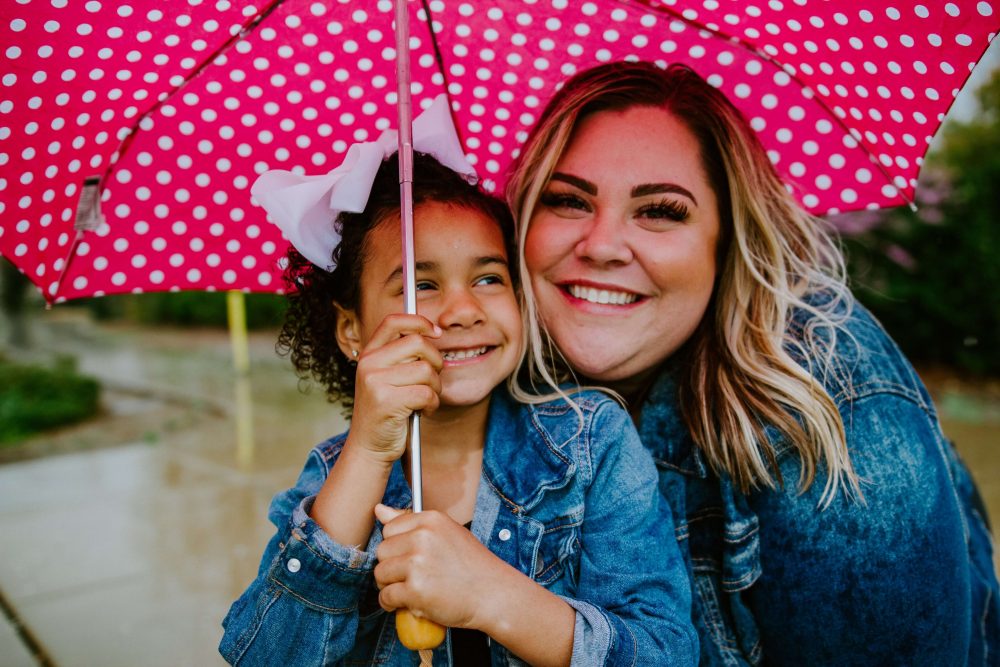
Have Conversations at Home
Our nation and neighbors are hurting right now. Jesus says that we need to love our neighbors as fully and compassionately as the Good Samaritan in his parable.
My awareness of current events is reminding me to start discussions at home about what hate and love look like, how we can stand up for our friends and against injustice in our own lives (like at school), and how to celebrate differences while finding unity in our similarities.
Make sure you address current events at an age-appropriate level. My kids are young – still preschool age – so we focus on being kind to all our friends, to realize that some people are mean to others because of our differences, and to always support and speak up for our friends if someone is being mean to them.
Ask questions like:
How are some of your friends the same and different than you? Why do you think God made us each different?
Who is our neighbor? How does God say we should treat our neighbors?
Who are your friends? Who do you know that could use a friend? What does it look like to be a good friend?
What does compassion mean? How can we show it as a family or individually?
How can you stand up against someone who is bullying you or someone else?
What is justice? What is injustice? Do you think everyone should be treated justly? (God does.) How can we be part of making sure everyone is treated justly?
Participate in Conversations at Church about Race and Racism
We need to be talking about racism at church. We need to know what our brothers and sisters are experiencing, and we need to support each other and listen with humility. It’s true that we are the same before God – but our struggles are different, and we need to understand each other.
Robin shares below some tips on how to do this, speaking from a multiracial household.
Our churches need to examine how they react to racism and speak up against it. As white Christians, we need to humbly examine our own bias because our culture ingrains it in us more than we may realize. If we look around and our circle of friends all look like us, we need to look for ways to expand our circle. Get involved in ministries that serve the underprivileged.
BE TEACHABLE! We can’t possibly understand all that has gone on in minority communities for hundreds of years, no matter how many people we know or books we read, but education is a good starting point. Of course, in all this, we pray and look for God’s direction for our hearts, thoughts, and actions.
– Robin, In the Gray Area
Listen to and Understand How Racism Personally Affects Others Daily
Something that has greatly impacted me is hearing from people that are directly affected by racism in their everyday lives. Especially moms. Kristen of Only By Grace 415 shared a post that calls attention to the fears faced by moms of children with brown or black skin. She shares in her post of one example:
They talked about climbing trees at the park and I warned them to be careful. Not because I was worried they would fall – they are 14 and 15 – but because I honestly had to think twice about someone calling the cops on them. Incredulously the youngest asked, “Mom do you think we are going to fall?”, when I voiced myself. Just how do I word that I am worried that someone could call the cops and that it could end badly? I thought, maybe #killedwhileclimbingtrees is not a hashtag I want to add to the growing list that people of color need to think about in order not to get killed.
Listen, read, and understand how racism affects others personally and daily. Moms, let’s be allies and support each other, setting that example to our children, so that they can be allies for their friends, too.
Diversify Your Guest List
What I’ve found to be the most helpful for teaching my children about these issues is having a very diverse guest list at our dinner table. As we welcome others into our lives, the issues we’ve read about in books and the conversations we’ve had all come together to give them a context for sorting through these things and even mentoring relationships with people who are have different backgrounds and experiences but who follow the same Lord.
– Katie, Hospitable Homemaker
Katie gives amazing tips on her blog about glorifying God with your hospitality, by the way! See her guest post on how to practice hospitality even if it feels overwhelming.
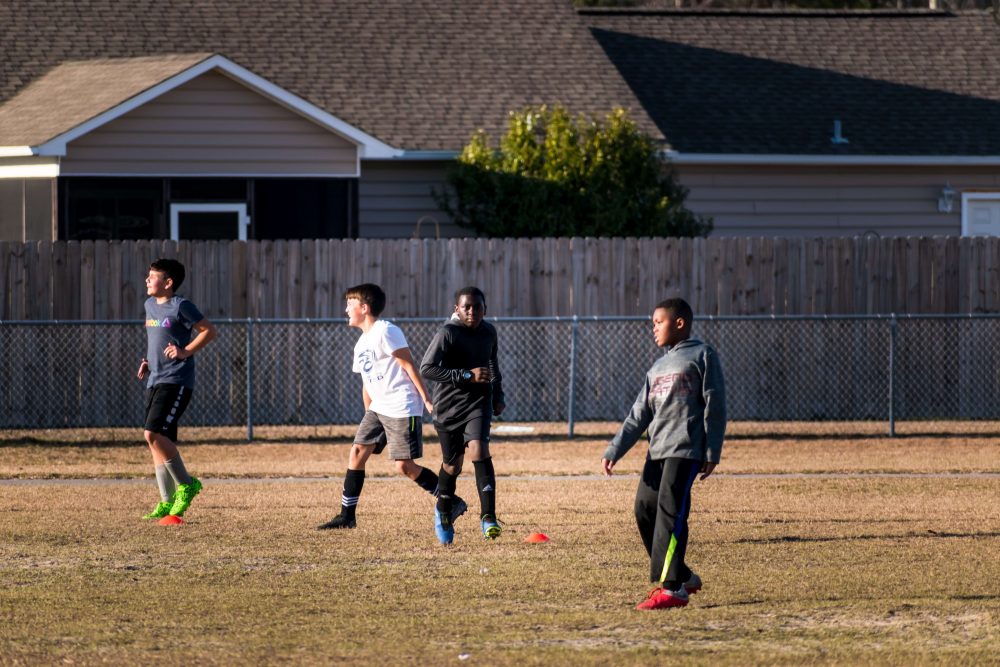
Diversify Your Media
I think something that’s helpful when they’re that little is exposing them to media that has people of different ethnicities, whether it’s children’s books, shows, etc. It helps them see that, yeah, people may look different on the outside but we can still have the same interests or concerns. And I think any exposure to the idea that there’s more than one perspective (and that’s okay) is helpful.
I think besides that sometimes situations just have to come up organically to discuss appreciating differences.
– Briana, a friend and educator
Also love Briana’s “egg experiment”: I’d have one white egg and one brown egg and ask them to predict if there would be any differences once we open them. They get pretty excited about that one and we have a good discussion.
Lead by Example
Nina suggests diversifying your book shelf, volunteering, and spending time with friends who look different and come from different backgrounds. On a greater level, though, she emphasizes our own speech and example around our kids:
We discuss color, we don’t say we are colorblind.
More is caught than taught – so we make sure that our voices are heard, my husband and I. We stand up for injustice and for the voiceless and I’ll admit that is hard a lot of days. We make a lot of mistakes and don’t get it right many times. But it is crucial to me that my son stands up for what’s right as he grows up.
– Nina, Nina Hundley

Resources
Thank you to the ladies in this post for sharing reading recommendations, and also to my friend and fellow mama Alanna, who shared some as well.
Books for Children:
I Am Enough – Grace Byers
We’re Different, We’re the Same – Bobbi Cates
One Big Heart: A Celebration of Being More Alike Than Different – Linsey Davis
Whoever You Are – Mea Fox
Little Leaders and Little Legends – Vashti Harrison
God Made Me and You – Shai Linne
God’s Very Good Idea – Trillia Newbell
It’s Okay to Be Different – Michael Todd Parr
All Are Welcome – Alexandra Penfold
I Am Human – Susan Verde
Books for Adults:
Between the World and Me – Ta-Nehisi Coates
I See You – Terence Lester
Homegoing – Yaa Gyasi
Be the Bridge: Pursuing God’s Heart for Racial Reconciliation – Latasha Morrison
Just Mercy: A Story of Justice and Redemption – Bryan Stevenson
Rediscipling the White Church – David Swanson
Helpful Posts
How to Talk to Kids About Racism and Race – That Sister
Anti-Racism for Kids – Parents.com
Choosing a Lifestyle of Radical Love – Leanna, Lines from Leanna
The Lack of Cultural Diversity in Christian Media – Luisa, Fruitfully Living
Join Your Prayer Because We are All in This Together – Kelly, Kelly R Baker
So how about you?
How are you talking about race and racism with kids in your home? How are you helping them cultivate compassion and learn to love like Jesus does?
Photo Credit:
1 – Rene Bernal on Unsplash
2 – Gabe Pierce on Unsplash
3 – Char’ Berry on Unsplash
4 – Kimberly Farmer on Unsplash





A wonderful list of ideas and practical tips. We have to use our position as mothers to teach our kids to be better than previous generations. To not just stop being racist, but to be actively anti-racist.
Absolutely agree, Katie. Thank you. This will make all the difference for the next generation <3 Glad to be on the same team of being intentional and active in this conversation!